What are the basic moves in Taekwondo

What are the basic moves in Taekwondo

[elementor-template id=”6227″]

Share This Post

However, because they sharpen the mind and strengthen the body, they are still useful endeavors. Martial arts training delivers a wide range of mental and physical health advantages.

Because of this, Taekwondo is one of the most popular martial arts in the world. Although specific numbers are unknown, it is thought that there are tens of thousands, if not hundreds of thousands, of Taekwondo black belts around the world. There are presently 49 taekwondo practitioners that have reached grandmaster status, the highest honor bestowed by international taekwondo organizations.


But don’t become discouraged. Anyone can learn Taekwondo; all it takes is determination and willpower. Like any other martial art, taekwondo skills demand dedication and hard work. The fundamental moves are simpler to learn but must be executed with conviction and confidence.

The Stance

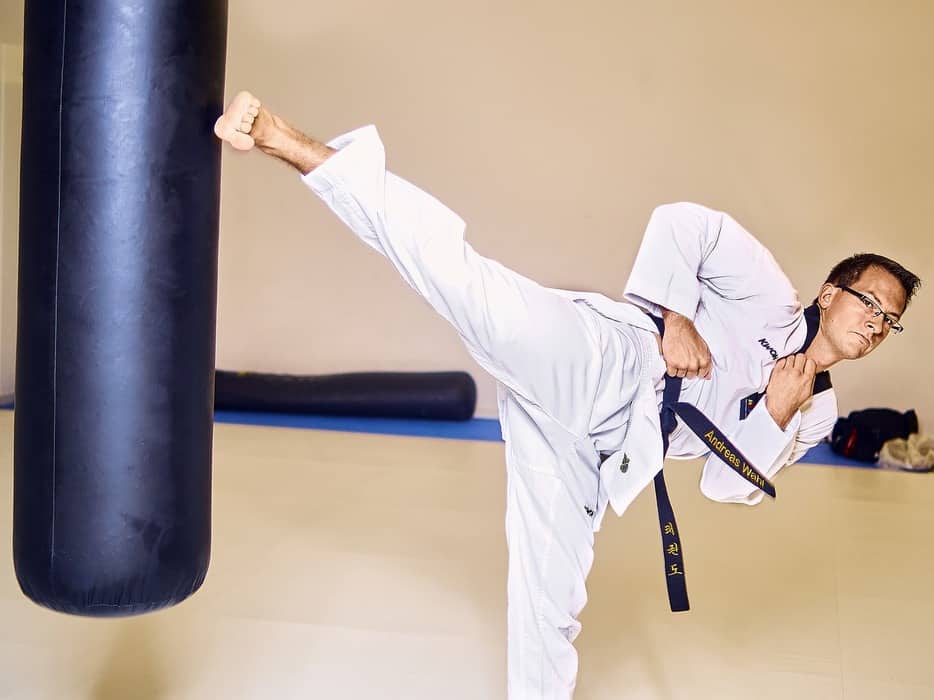
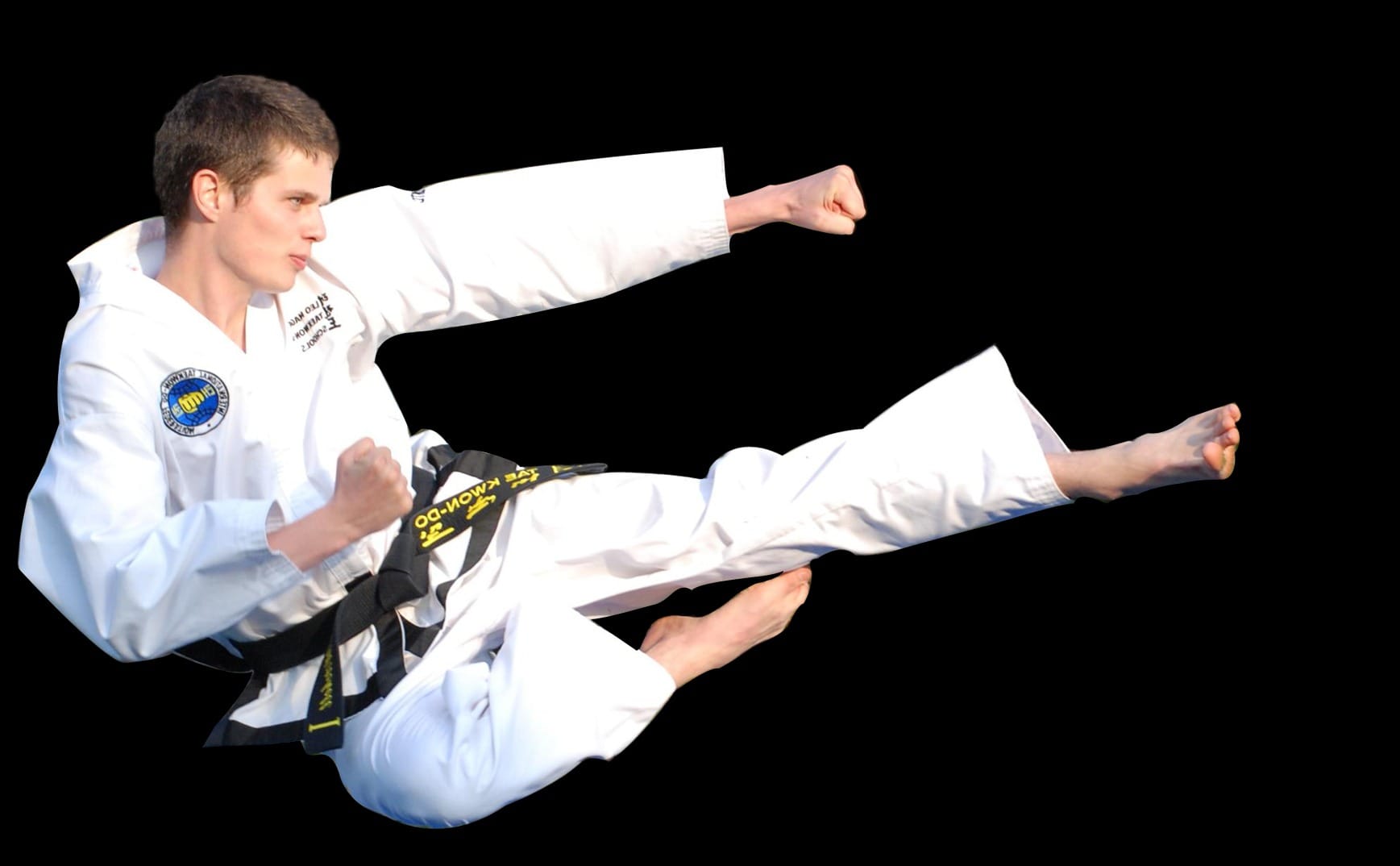
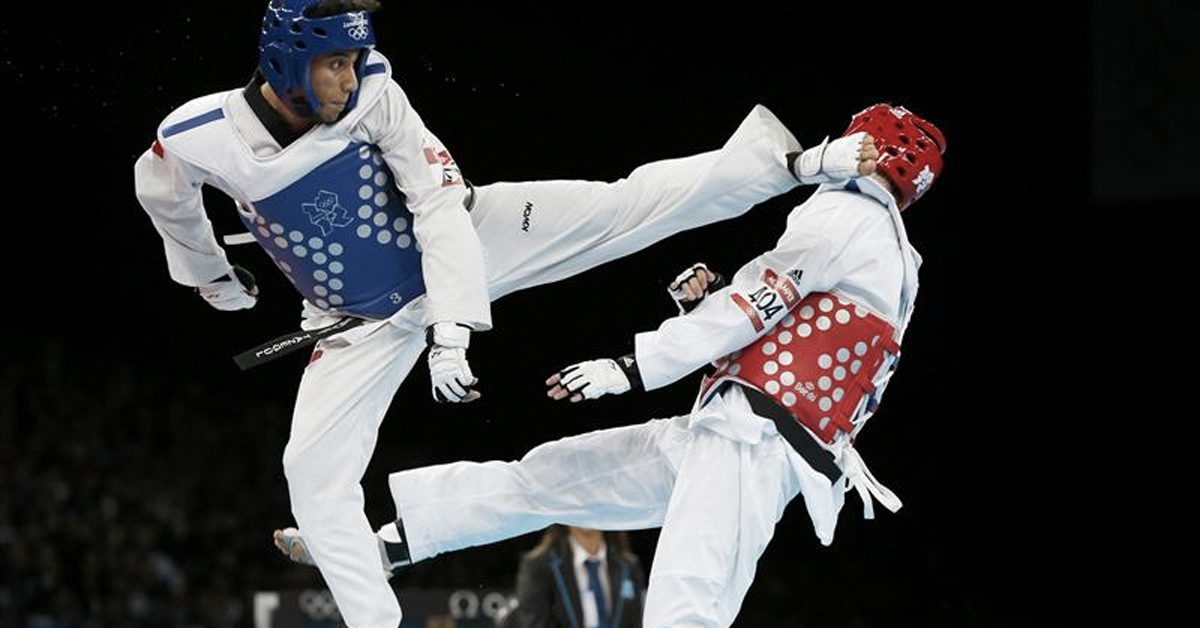
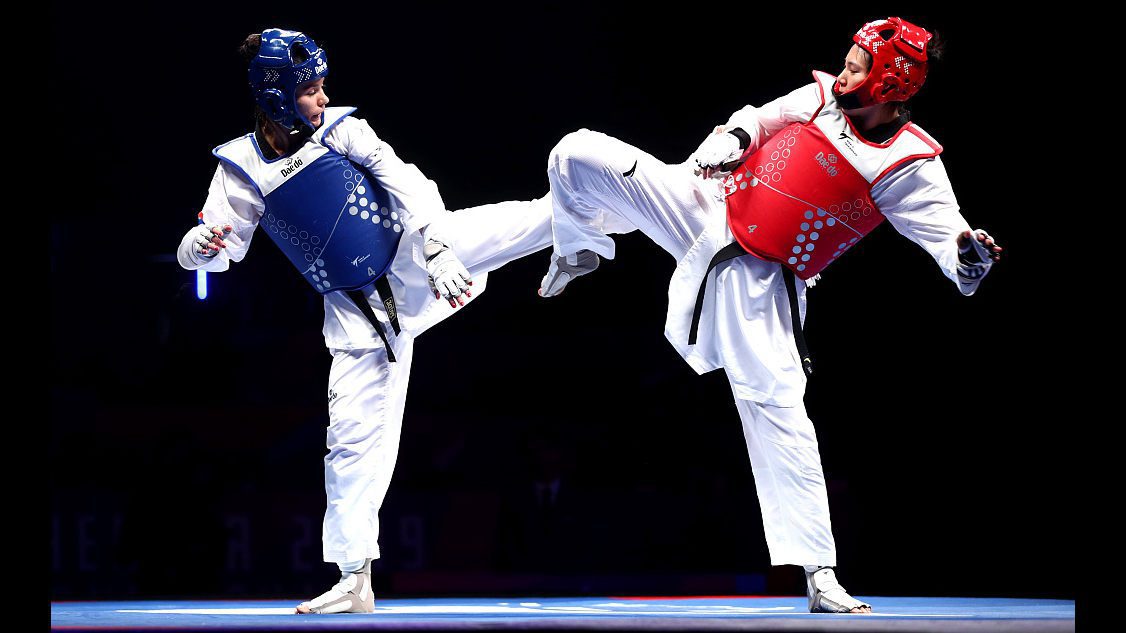
When learning this martial art, stance, or how you stand, is the most critical factor to consider. The most important factor to consider is your stance, which will determine how well you perform in all subsequent lessons. Holding the proper stance also allows you more freedom of movement when throwing punches and kicks.

Attacks

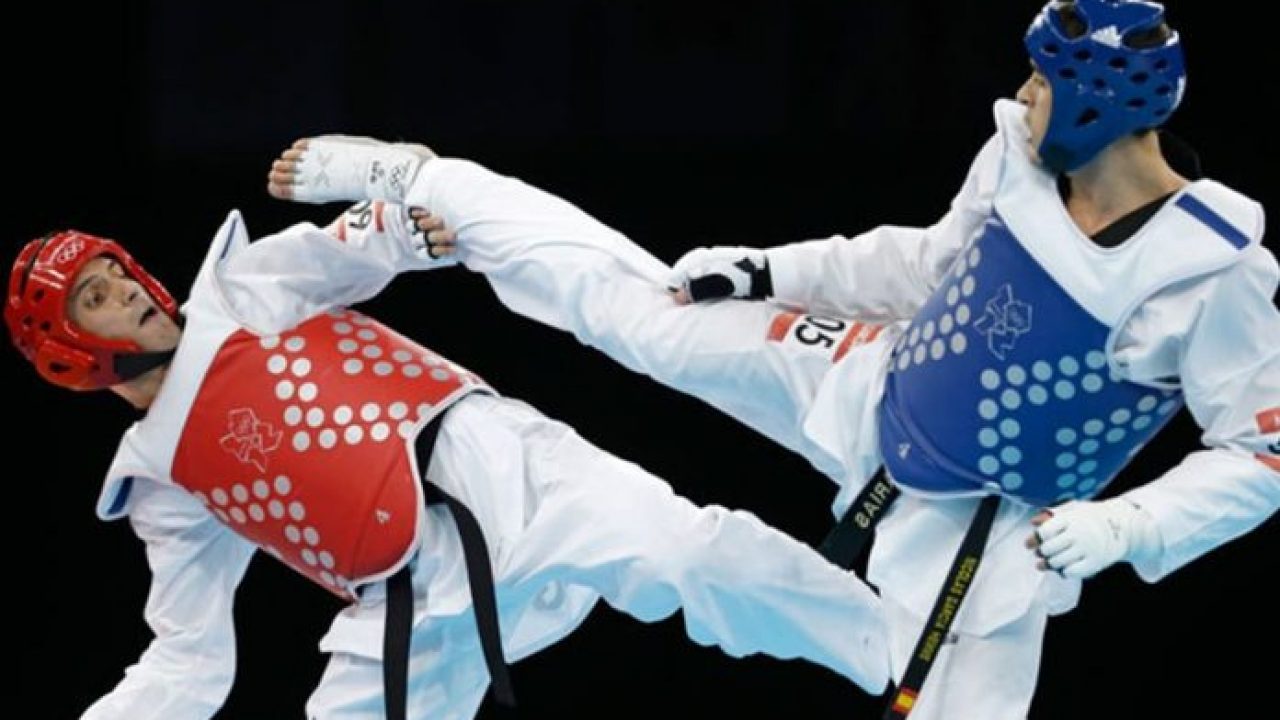
Taekwondo began with only the use of the legs, but it has expanded over time to include strikes and hits with the arms. However, you can’t learn to attack without first learning to protect. As a result, your teacher will teach you the attack movements much later. The punch has replaced the kick as the primary weapon in these movements, and understanding the punch is a must.

Blocks

The most fundamental moves are the blocks, which are designed to help you escape being struck by your opponent. You can block an approaching blow with pretty much any part of your body and then get a chance to strike a blow yourself shortly after. Blocks must be fast and strong to block an attack on yourself, and they are given a lot of weight when learning Taekwondo. To properly counter the impending attack, each of the three types of blocks demands a twist at the finish of the maneuver. Blocking tactics can only be learned after a lot of practice. The low block, medium block, high block, outer forearm block, and knife block are examples of some of the blocks.

Subscribe To Our Newsletter

Get updates and learn from the best

More To Explore
Koryo Taekwondo Club is the #1 Martial Arts school in Gex, Gland, Versoix, Champel and Geneva. Taekwondo Classes for ages 3 to 100. After school programs, Sparring, Poomsae, …


Twitter


Facebook-f


Youtube


Instagram

Locations

  • Champel
  • Versoix
  • Pay de Gex
  • Gland
  • Geneva

Classes

  • Junior
  • Senior
  • Private
  • Adults
  • Champs

Downloads

  • Shop
  • Free Trial
  • Belt Certificate
  • About Us
  • Contact Us

© All rights reserved

Made with ❤ by Koryo Club

What are the 5 rules of taekwondo

[elementor-template id=”6227″]

Share This Post

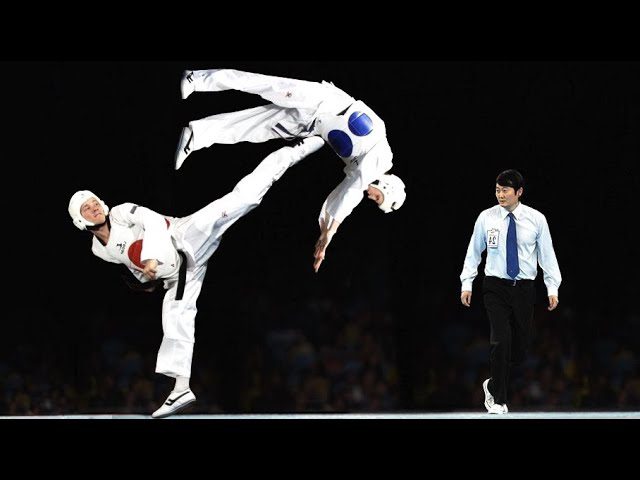
In a Taekwondo sparring competition, the athlete’s goal is to kick and punch the opponent while avoiding being kicked and struck. Punches and simple kicks to the trunk score lower than the most challenging techniques, such as spinning kicks to the head. Penalties are given to players who fall or leave the matting area; therefore, tactics play a role. The five ways to score in competition Taekwondo sparring are listed below.


What are the basic rules of competition in Taekwondo?

Earning the most points is the name of the game in Taekwondo sparring, aside from knocking out your opponent. Competitors get points by landing a clean legal assault on the opponent’s head or trunk (the area covered by the chest protector). The following are the points awarded:


A strike to the pectoral guard is worth one point.

In Taekwondo, a punch must land clearly in the center to the upper part of the chest and with a lot of force to score. Corner referees score punches, which must be evident to all onlookers to be scored. Students in Taekwondo lessons have been permitted to use their boxing talents to score points under Taekwondo rules!


Two points are awarded for a regular kick to the chest guard.

These are the “bread and butter” of a Taekwondo fighter’s arsenal, and they should account for most of your points. The methods used to acquire these points are the most basic, making them the most accessible to rivals. Roundhouse kicks, sidekicks, and push kicks are all classic kicks that can score these points. It’s important to remember that you don’t have to kick exactly on the chest. You can also kick on the rib cage or the side of the chest guard.


A spinning kick that lands on the pectoral guard earn four points.

You will receive four points for any spinning kick you successfully land on your opponent. Back kicks, tornado kicks, and a roundhouse kick that lands after a spin or turn are examples of these kicks. These kicks are primarily utilized as defensive tactics, except for the twisting roundhouse kick. In other words, they are most effective when countering your opponent’s offensive attacks.


Three points are awarded for a regular kick to the head.

These kicks are a little harder to hit than kicks aimed toward the chest guard, so you’ll get more points if you succeed. Roundhouse kicks and ax kicks are the most common kicks to the head. Flexibility and leg strength are stressed in Taekwondo courses so that students may learn the technique of scoring with head kicks.


Five points are awarded for a spinning head kick.

These kicks are the hardest to land and, as a result, receive the most points. If they land with enough force, they can also knock out your opponent in many circumstances. Spinning hook kicks, rear sidekicks (that land on the head), spinning roundhouse kicks, and tornado kicks are all familiar kicks that will gain these five points. The kicking abilities of students in Taekwondo programs and their dynamic talents with their legs help them score maximum points in Taekwondo matches.

Subscribe To Our Newsletter

Get updates and learn from the best

More To Explore

Koryo Taekwondo Club is the #1 Martial Arts school in Gex, Gland, Versoix, Champel and Geneva. Taekwondo Classes for ages 3 to 100. After school programs, Sparring, Poomsae, …


Twitter


Facebook-f


Youtube


Instagram

Locations

  • Champel
  • Versoix
  • Pay de Gex
  • Gland
  • Geneva

Classes

  • Junior
  • Senior
  • Private
  • Adults
  • Champs

Downloads

  • Shop
  • Free Trial
  • Belt Certificate
  • About Us
  • Contact Us

© All rights reserved

Made with ❤ by Koryo Club

What is a tornado kick

What is a tornado kick

[elementor-template id=”6227″]

Share This Post

The tornado kick confuses an opponent. An opponent can’t see where a tornado kick is coming from, making it tough to dodge or evade. It’s easy to lose control of this kick, which reduces the focused force of the strike. Aerial kicks must also be launched and aimed accurately to make contact. Uncontrolled tornado kicks or miss-targeted kicks are ineffective.

The secret to learning to do a tornado kick is practice. Practicing tornado kicking techniques under the supervision of a teacher or coach will assist in developing an excellent tornado kick.

The Kbands’ focused resistance can boost the tornado kick’s power, force, and precision. Legs, hips, and core muscles will become stronger after several practice rounds and repetition using Kbands Resistance Bands. After the bands are removed, the body will build balance and muscle memory, making the tornado kicking motion seem light and rapid.

HOW TO DO A TORNADO KICK: PREPARING FOR THE KICK

Martial artists must warm up their muscles and stretch appropriately before starting a practice session. The upper legs can be banded after activating and stretching muscles. The user can then attach the Bands Resistance Bands to the metal rings of the straps.

HOW TO DO A TORNADO KICK: STEP-BY-STEP INSTRUCTIONS

For the tornado kick, pupils can spar. Feet grounded, arms outstretched, elbows bent, hands open and relaxed. The right leg will kick up with full effort, the knee securely compressed to the chest.

The right leg crosses the torso in front of the right foot. The right foot planting will initially be uncomfortable, but the feet should be close together. After the right foot is planted, the body rotates, and the left leg rises. The left leg will NOT kick. The left leg creates the torsional momentum that generates the right leg’s force.

The left leg is raised at the hips and extended halfway out of the body. This leg will be utilized to develop the core power but will quickly return to the ground to plant the body as the right leg kicks.

The right calf raises from the floor during the left leg’s turning motion, and the right foot targets the target. At this phase, the pupil should focus on the target’s collision with the right foot. Visualize the target at face height.

The tornado kick appears to be three kicks; however, the first two are used for placement and momentum generation. Kick one: rising right leg crosses torso from sparring posture. In the second kick, the student rotates 360 degrees. Finally, kick three: right leg rising from the ground, striking the opponent in the face.

For the third kick to be effective, it must build on the momentum of the second and reach the objective. The third kick should be controlled as well. Again, practice and repetition will be the key to efficient tornado kicking. Coaches and teachers seeing students performing the tornado kick should look for balance, control, and a core-centered physique. Always keep the student’s eyes on the target, not the ground. Stretching, warming up, and maximizing the range of motion will make this kick much easier and more synchronized.


Subscribe To Our Newsletter

Get updates and learn from the best

More To Explore

Koryo Taekwondo Club is the #1 Martial Arts school in Gex, Gland, Versoix, Champel and Geneva. Taekwondo Classes for ages 3 to 100. After school programs, Sparring, Poomsae, …


Twitter


Facebook-f


Youtube


Instagram

Locations

  • Champel
  • Versoix
  • Pay de Gex
  • Gland
  • Geneva

Classes

  • Junior
  • Senior
  • Private
  • Adults
  • Champs

Downloads

  • Shop
  • Free Trial
  • Belt Certificate
  • About Us
  • Contact Us

© All rights reserved

Made with ❤ by Koryo Club

Where did the taekwondo originate

Where did the martial art originate

[elementor-template id=”6227″]

Share This Post

History of Taekwondo.

A painting painted on the wall of a tomb built in the Korean kingdom of Koguryo between 37 BC and 66 AD is one of the earliest evidence of Taekwondo’s existence. The picture depicts two unarmed people in a Taekwondo-style stance facing each other. Figures completing blocks and wearing costumes identical to those worn in modern-day Taekwondo instruction are seen in additional drawings in the tomb.

Taekwondo and its techniques evolved in tandem with Korea’s development. As a result, almost all of the chronicles of the several kingdoms that existed within the country throughout the ages provide evidence and histories of Taekwondo training.

The highest level of ancient art was achieved in the kingdom of Silla. However, this small kingdom was continuously attacked and opposed by larger and more robust areas. In response, King Jin Heung, the kingdom’s monarch, founded the “Hwarang,” or “Flower of Youth,” an elite force of warriors.

The Hwarang was made up of the sons of the kingdom’s lords. They were hand-picked and adequately trained in all facets of military skills, including unarmed combat, known as Tae Kyon at the time. The Hwarang were taught the value of improving their bodies, minds, and spirits. The youthful soldiers were taught history, poetry, and philosophy in addition to fighting techniques. Hwarang Do was the name given to the complete corpus of knowledge. As a result, the Hwarang obtained abilities that were useful in fighting and everyday life. This is directly related to modern Taekwondo instruction, which teaches self-defense techniques, better character, self-discipline, and confidence that can be used in any situation.

The Koryo dynasty (935 AD – 1352 AD) succeeded the Silla dynasty, and it was during this period Korea got its name. Subak Do, or martial arts practice, evolved into a structured sport with specific regulations. Martial arts were firmly ingrained in Korean society due to the royal family’s sponsorship of competitions and displays.

Benefits of Martial Arts / Taekwondo.

Fitness.

The principles of Taekwondo techniques are based on the design of your body. For power, you develop the larger, more powerful muscles of the torso. The techniques’ speed comes from the arms and legs’ fast, agile muscles. As you progress in Taekwondo, you will learn to coordinate this speed and power and develop the concentration to focus all of your body’s strength into a small, hard striking surface like the edge of the hand or the heel of afoot.

Self-Defense.

The results can be incredible when the speed and power developed through Taekwondo are used in a self-defense situation against the vulnerable parts of an attacker’s body. Taekwondo allows a woman to emphasize her natural physical strengths, such as power in the legs, while learning a method of self-defense efficient against a much larger opponent.

Self-Confidence.

This does not come naturally for many people, but self-confidence can be developed over time. Through Taekwondo, as you accomplish new goals, your confidence level increases. In addition, Taekwondo instills a sense of discipline and self-confidence that can carry over to all aspects of your life.

Subscribe To Our Newsletter

Get updates and learn from the best

More To Explore

Koryo Taekwondo Club is the #1 Martial Arts school in Gex, Gland, Versoix, Champel and Geneva. Taekwondo Classes for ages 3 to 100. After school programs, Sparring, Poomsae, …


Twitter


Facebook-f


Youtube


Instagram

Locations

  • Champel
  • Versoix
  • Pay de Gex
  • Gland
  • Geneva

Classes

  • Junior
  • Senior
  • Private
  • Adults
  • Champs

Downloads

  • Shop
  • Free Trial
  • Belt Certificate
  • About Us
  • Contact Us

© All rights reserved

Made with ❤ by Koryo Club

What is the deadliest taekwondo move

What is the deadliest taekwondo move

[elementor-template id=”6227″]


Share This Post


Most schools and levels of taekwondo have different techniques, and not all of them are mentioned. Techniques are frequently integrated into a shorter set (Hyeong), though this varies by school.

The following are some of the most well-known Taekwondo kicks:

  • Ap chagi (front kick): This is a fairly linear kick. The practitioner brings his knee to his waist, draws his toes back, and extends his foot fast at the target. The snap kick is another name for it. The front kick is one of the first kicks taught in taekwondo, and it may become one of the most powerful if mastered. This method is designed to drive the attacker away, yet it can hurt the opponent.
  • Sidekick (yeop chagi): A powerful kick in which the practitioner extends their leg while simultaneously raising their knee and rotating their body 90 degrees. This technique should be employed in WTF-style taekwondo with the outside edge of the foot, yet the heel may generate additional force if sparring.
  • The practitioner elevates the knee, rotates the hips, pivots on the non-kicking foot, and snaps the kick horizontally into the target at an 80 to 90-degree angle, either with the instep or with the ball of the foot with the toes pulled back (dollyeo chagi).
  • Back kick (dwit chagi): The practitioner turns away from the target and pushes the back leg straight toward it, hitting it with the heel while keeping an eye on the target. This kick has a lot of strength thanks to the rotating action. Using this strike without adequate care will cause you to “spin out” and lose your balance.
  • Reverse sidekick (bandage yeop chagi): This kick is similar to the back kick, except that the body twists even more, allowing the heel to strike the target with the foot pointed to the side, rather than downward, as in a real back kick.
  • Huryeo chagi (hook kick): huryeo chagi (hook kick) is a Korean martial art. It’s a less common kick in the past, but it’s gaining popularity in recent competitions. The practitioner elevates the knee in a roundhouse kick-like motion, stretches the foot outward, and snaps it around in a dorsal arc with the heel as the intended hitting weapon.
  • Another kick that has gained popularity due to sparring events is the ax kick (naeryeo chagi). Like an outside crescent kick, the leg is normally elevated from the outside of the torso. The leg is then dragged down, the heel pointing downward. It is usually directed at the head, shoulder, or chest, and it needs a great deal of flexibility to use efficiently. This kick works well against the collarbone, which is easily broken by this technique. The kick’s initial lift setup can be done from the inside or center (straight up and down.)


🎯 Love Taekwondo? Watch KickTalks!

🥋 From powerful kicks to secret martial arts tips — KickTalks brings you fun and fast Taekwondo videos every week.
Subscribe for weekly Taekwondo facts & shorts!

More To Explore

Koryo Taekwondo Club is the #1 Martial Arts school in Gex, Gland, Versoix, Champel and Geneva. Taekwondo Classes for ages 3 to 100. After school programs, Sparring, Poomsae, …


Twitter


Facebook-f


Youtube


Instagram

Locations

  • Champel
  • Versoix
  • Pay de Gex
  • Gland
  • Geneva

Classes

  • Junior
  • Senior
  • Private
  • Adults
  • Champs

Downloads

  • Shop
  • Free Trial
  • Belt Certificate
  • About Us
  • Contact Us

© All rights reserved

Made with ❤ by Koryo Club

What is the order of belts in Taekwondo

[elementor-template id=”6227″]


🎯 Love Taekwondo? Watch KickTalks!

🥋 From powerful kicks to secret martial arts tips — KickTalks brings you fun and fast Taekwondo videos every week.
Subscribe for weekly Taekwondo facts & shorts!

Share This Post


Belts that signify the various levels of Taekwondo are deeply entrenched in the Korean history of Taekwondo. Taekwondo has eight belts, the first of which is white, which you acquire when you first start practicing. Yellow, blue, red, black, white, and black belts are the belts available. You wear stripes on each of the color belts to indicate your degree of achievement on that belt.

Taekwondo, Karate, Jiu-Jitsu, and other martial arts have different belt requirements. Standards differ from one school to the next. In general, a student will be requested to test when the instructor believes they are ready to advance to the next belt level. To avoid becoming belt factories, traditional Taekwondo schools (dojang) maintain high standards.

The colors of belts aren’t standardized, so they differ from school to school. In Taekwondo, each belt color corresponds to the student’s GUP (rank). The term GUP (sometimes written Geup) refers to a degree. When students transfer from one school to another, the GUP notifies the new instructor of their achievement level.

White Belt

This is a symbol that represents purity or innocence. This belt is used by all new students who have no prior experience in Tae Kwon Do. It symbolizes a fresh start and the start of a journey.

Yellow Belt

This color represents the ground and represents a seed being planted in order for its root system to form as it grows. At this point, the learner is starting to lay the groundwork for learning Tae Kwon Do.

Green Belt

The term “green belt” refers to how a seed, or now a plant, begins to grow. The student now has a solid basis on which to build, and their Tae Kwon Do skills continue to improve.

Blue Belt

The plant is growing and on its way to becoming a towering tree, while the blue belt represents the beginning of talking about the sky or heaven. Like the tree, the Tae Kwon Do learner grows stronger and matures.

Red Belt

This denotes danger and serves as a warning to both others and the student. The pupil must be aware of their newly acquired powers and maintain control over them. This is the student’s final belt before achieving their first aim of attaining a black belt.

Black Belt

Which, of course, is the polar opposite of white, indicating that the pupil has progressed to the point where he has completed his Tae Kwon Do fundamental instruction.

To someone who isn’t a martial artist, a black belt means they’ve mastered the art.

Subscribe To Our Newsletter

Get updates and learn from the best

More To Explore

Koryo Taekwondo Club is the #1 Martial Arts school in Gex, Gland, Versoix, Champel and Geneva. Taekwondo Classes for ages 3 to 100. After school programs, Sparring, Poomsae, …


Twitter


Facebook-f


Youtube


Instagram

Locations

  • Champel
  • Versoix
  • Pay de Gex
  • Gland
  • Geneva

Classes

  • Junior
  • Senior
  • Private
  • Adults
  • Champs

Downloads

  • Shop
  • Free Trial
  • Belt Certificate
  • About Us
  • Contact Us

© All rights reserved

Made with ❤ by Koryo Club