
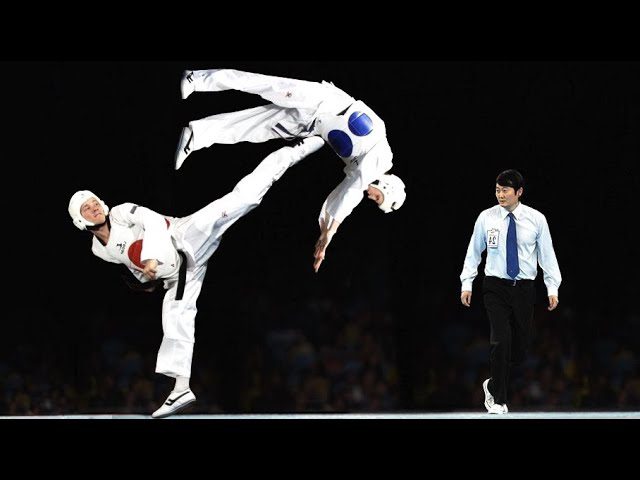
Yes, Taekwondo is accessible to beginners, but it takes time to become skilled. You do not need to arrive flexible, strong or experienced. A good beginner class teaches stance, balance, basic kicks, hand techniques and movement progressively, while an instructor corrects your technique.
Is Taekwondo hard for beginners?
The first lessons are usually manageable because beginners work on fundamentals rather than advanced spinning or jumping kicks. Coordination and flexibility can feel unfamiliar at first, but both improve through regular practice.
How long does it take to learn Taekwondo?
There is no universal timeline. A student can learn basic movements relatively quickly, while reliable technique, sparring skills, poomsae and black-belt-level proficiency take sustained training. Belt and promotion requirements also vary by school and organization.
Do I need to be flexible before I start?
No. Flexibility is useful in Taekwondo, especially for higher kicks, but it is something you can develop. Beginners should prioritize controlled range of motion and sound technique rather than forcing high kicks.
Can adults learn Taekwondo?
Yes. Adults can start without previous martial-arts experience. Training can be adapted to current mobility and fitness, and progress does not depend on having started as a child.
Is Taekwondo good for kids?
Age-appropriate Taekwondo can give children a structured way to develop coordination, balance, listening skills and confidence. The important factor is choosing a class designed for the child’s age rather than placing very young beginners into an adult-style program.
Koryo separates younger students into age-appropriate programs, including TaekFundo for ages 4–6 and Koryo Junior for ages 7–10.
Can you learn Taekwondo at home?
You can practice conditioning, mobility and movements you have already been taught, but learning entirely alone has an important limitation: you cannot reliably see your own technical errors. Coaching, partner work and appropriate supervision become increasingly important as techniques become more complex.
What makes Taekwondo difficult?
- Developing balance while kicking on one leg.
- Coordinating hip rotation, foot position and timing.
- Building flexibility without sacrificing control.
- Learning distance and timing with a partner.
- Staying consistent long enough for movements to become natural.
What makes it easier to learn?
Train regularly, focus on one technical correction at a time, and resist comparing your progress with someone else’s. Consistent basic practice usually matters more than trying advanced techniques too early.
Start with a trial class
The simplest way to know whether Taekwondo suits you or your child is to try an age-appropriate class. Koryo offers programs across Geneva, Vaud and the Pays de Gex.